Recent years have shown economic uncertainty, shifting market dynamics, and persistent inflation. It’s rare to find investment with a good combination of stability, diversification, and adaptability. With interest rates still elevated and traditional savings accounts offering limited returns, ETFs are promoted as a more effective way to preserve and grow ones money. The appeal? Low fees, broad market exposure, and the flexibility to invest in everything from global tech giants to booming sectors like AI, clean energy, and even precious metals—some of which have delivered triple-digit gains this year.
The ETF market itself is evolving rapidly. While ETFs are widely praised critics caution that they’re not a one-size-fits-all solution. Some of the key concerns being voiced are, that market volatility still hits ETFs and that there might be vverconcentration in popular sectors giving a false sense of security. And all these concerns are valid.
I have been dealing with ETFs since I started to work in the finance sector. Starting also fresh at the stock market and trying to understand, why there is such a hype around ETFs. Mainly, my research has taken away my fear of market volatility and the loss of my saving, helping me to go through market turbulences without worries. The key insights, I want to share in the following sections:
- I want to introduce a long-run perspective on the capital market, by analysing the Dow Jones
- Then deviate the findings and apply them to the current trend of ETFs investing
- Lastly, summarizing my findings.
Dow Jones
History of the Dow Jones
The Dow Jones Industrial Average (DJIA) — often just called “the Dow” — is one of the most well-known indicators of how the stock market in the United States is doing. Think of it like a scoreboard for the economy. It tracks the stock prices of 30 major companies that are leaders in industries like technology, finance, healthcare, and consumer goods in the United States. Because it only includes 30 companies it doesn’t represent the entire stock market and cannot explain fully the whole market. But one advantage of the Dow Jones is, that it is tracking the market development since 1896 and this gives us a good insight in history.
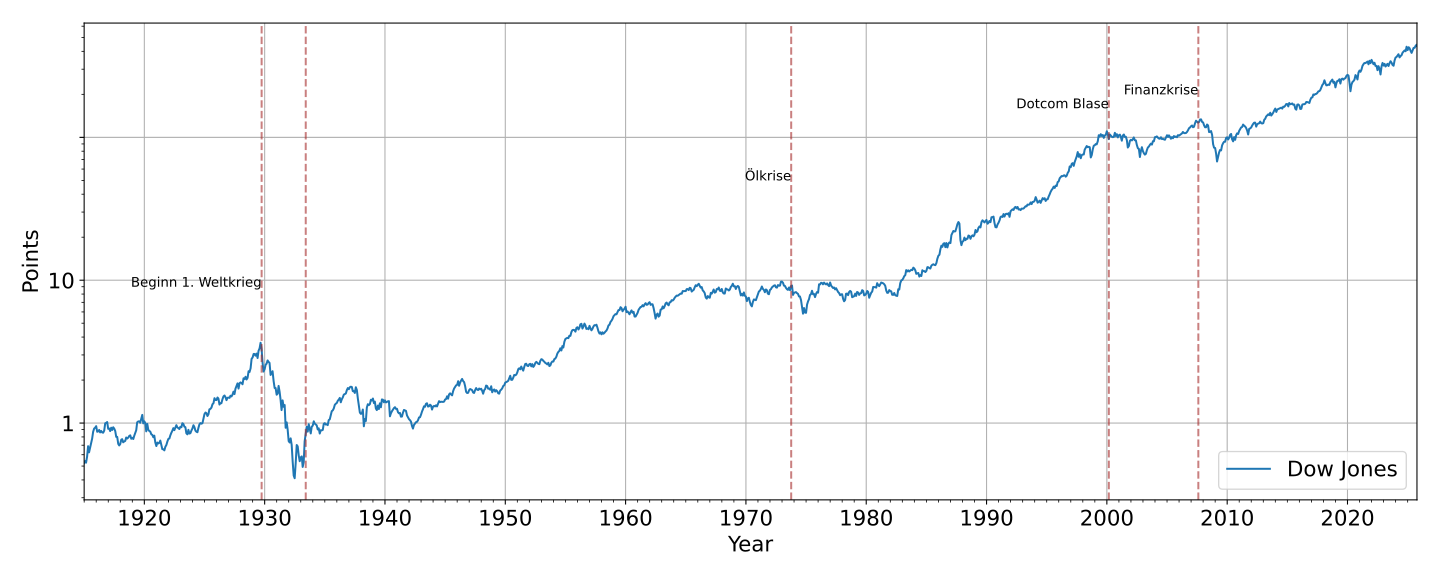
History of looking at the performance of the Dow Jones
As we can see, quite a few of very important market happenings can be seen here. Naming:
- the Great Depression in 1929
- the oil crises in the 1970s
- the burst of the dotcom bubble in the beginning of the 2000s
- the financial crisis in 2007
- the beginning of the COVID19 pandemic in 2020
Risk Awareness
We can now have a more insight look of how these crisis were impacting the stock market by checking the maximum drawdown from the All time high.
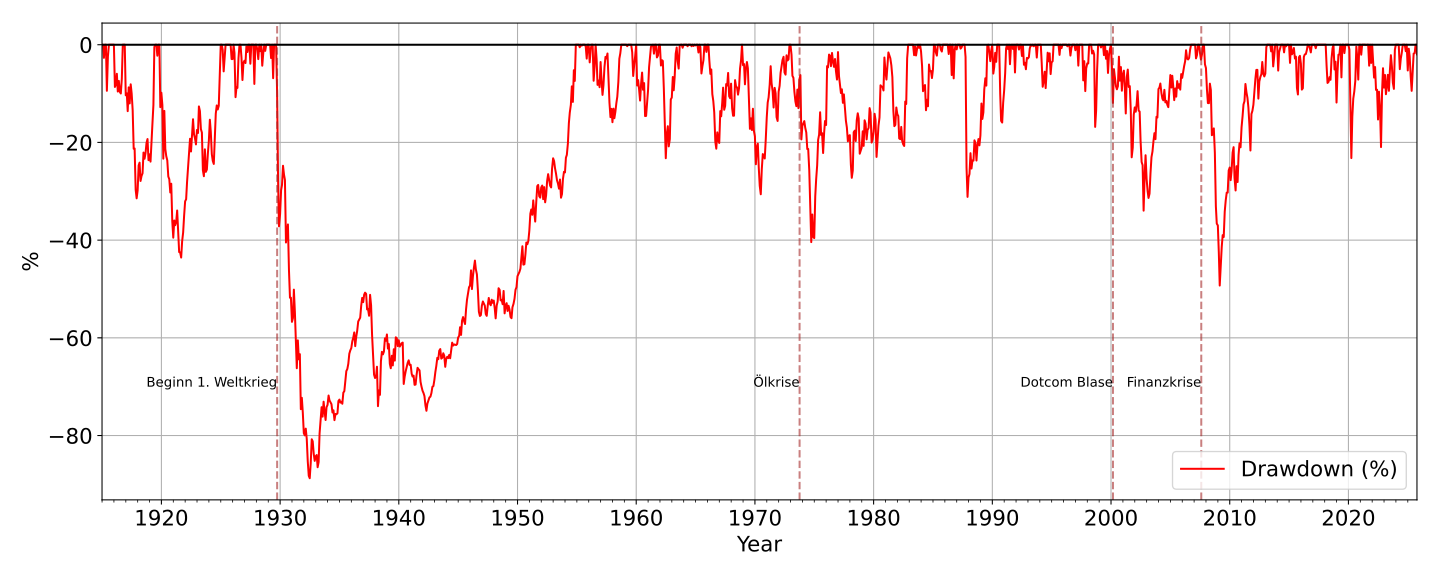
Maximum Drawdown of All-Time-High of the Dow Jones
We can see that the most severe impact to the financial market was the Great Depression in 1929 and the beginning of world war 2 which caused the market to crash by almost 90%. All the other following crisis had an impact of “only” up to 50%. The most servere was the financal crisis with 48%. The corona pandemic and the burst of the dotcom bubble was comparable low with up to 30% draw down. Still the market always recovered. This is actually very visible if we look at the rolling yearly revenue after 10 years of investing.
The long run is positive
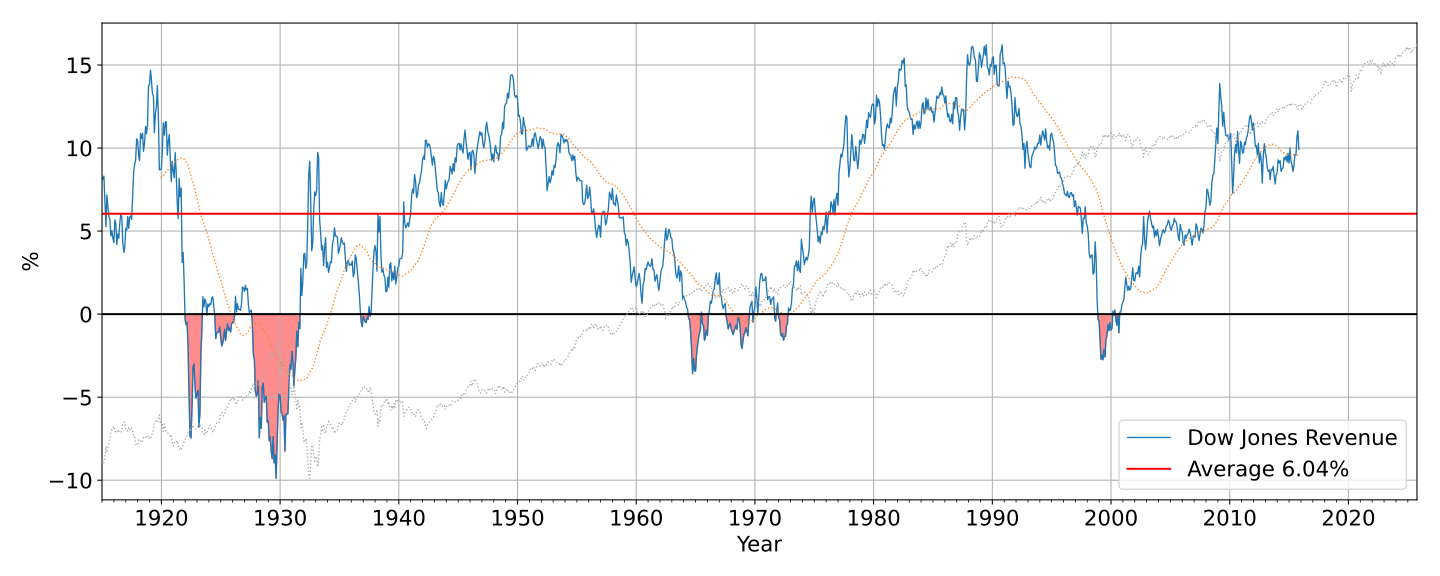
Rolling yearly revenue after 10 years of investing
This graph shows for every date during the last 100 years, how your yearly revenue would have been, if you would have invested that day and hold the asset for 10 years. We can see, that if you would have invested in 1929, you would have had a yearly loss of around 10% p.a for the upcoming 10 years. Same is, if you would have played on the stock market just before the burst of the dotcom bubble, you would have had no profit during the next 10 years.
On the other hand, in the last 100 years there have been only accumulated time periods of about 15 years, where you would not have made any profits. The other more than 85 years, would have brough profits up to 15% every year.
Deviate an investment strategy
We can use that knowledge to come up with a good strategy to invest into the stock market. Because it turns out, that if we invest in a diversified portfolio of companies, we can make profit in the long run with a rather limited risk exposure. The Dow Jones was just an exmaple, because it is very old. As mentioned earlier, it is not a good asset portfolio, because it only contains 30 companies and they are all based in the US. We need something more diversified.
The World Index
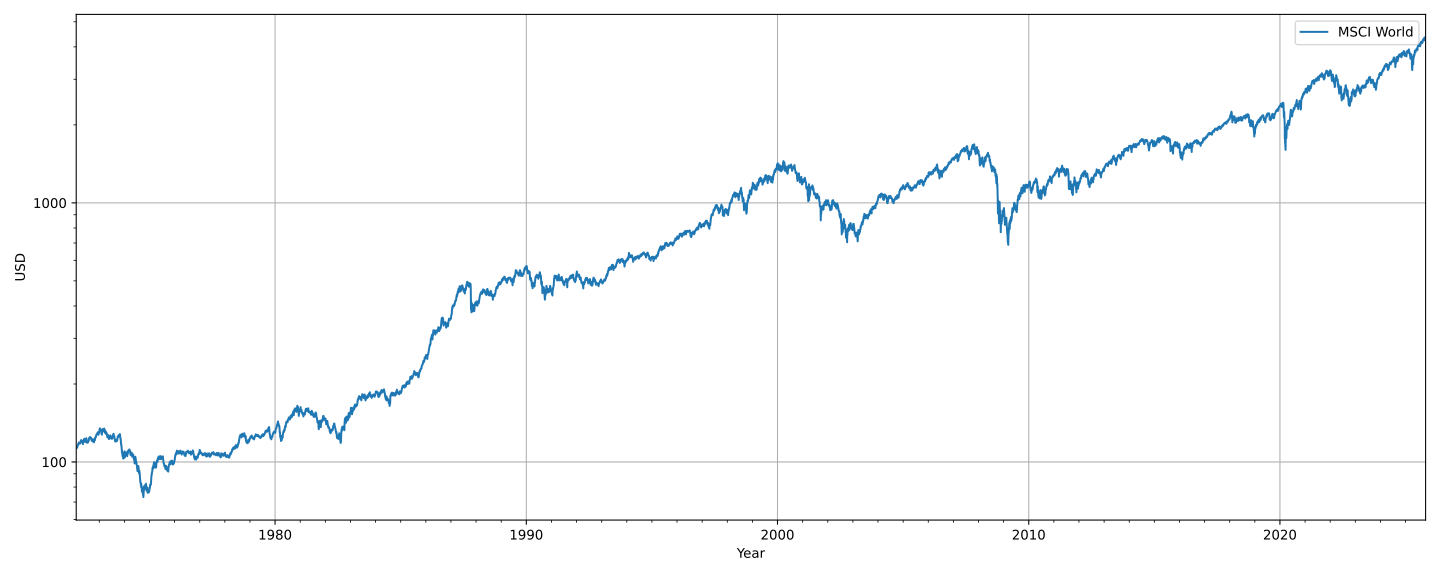
The MSCI World Index Performance
Here the MSCI World can help us. The MSCI World Index is like a global snapshot of the stock market. It tracks the performance of over 1,600 large and mid-sized companies across 23 developed countries, including the US, Japan, Germany, the UK, and Australia. It’s one of the most popular tools for understanding how the global economy is doing. Investors use it to diversify—meaning they spread their money across many countries and industries to reduce risk. It’s the backbone of many ETFs (Exchange-Traded Funds), which let everyday people invest in hundreds of companies at once. So we can use such an ETF to build up a global, diversified portfolio.
Risk Awareness
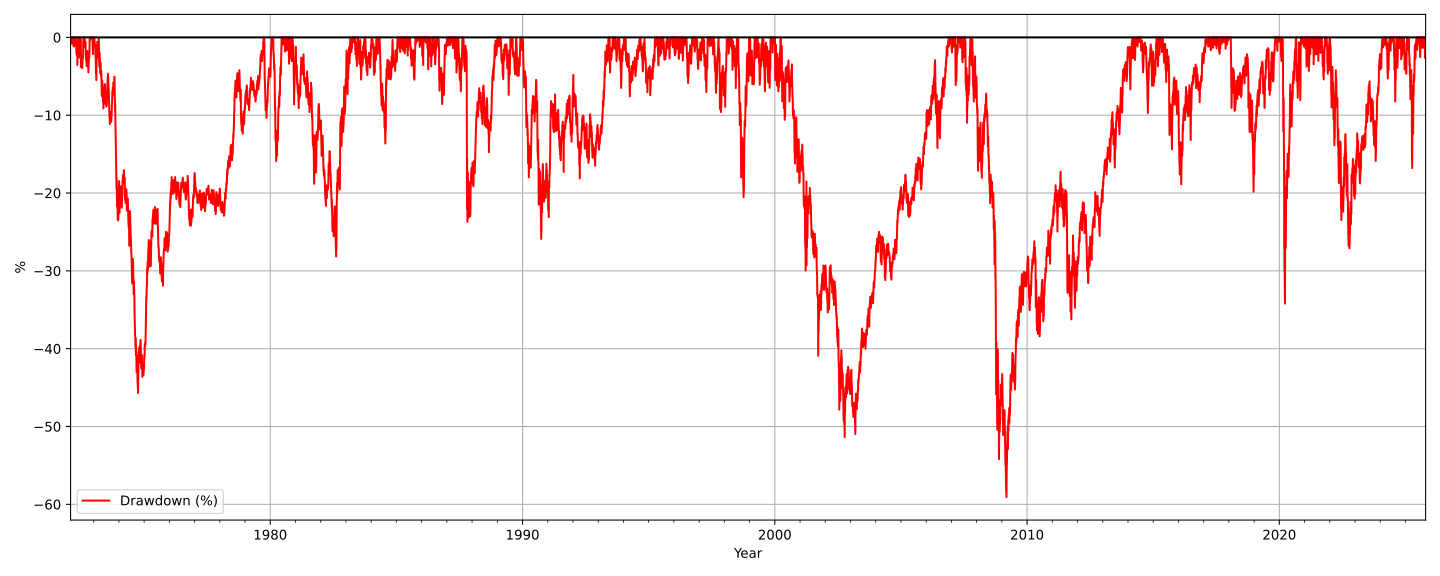
Maximum Drawdown of All-Time-High of the MSCI Wcrld Index
Similar as for the Dow Jones, we will see, that the MSCI World Index has similar drawdown rates. However certain market areas might be more impacted than the US and lead to shortly higher losses and therefore a higher volatility. The financial crises, the crises with the so far biggest impact on the MSCI World Index caused a drawdown of almost 60%. Also the burst of the dotcom bubble brough the Index about 50% down.
The long run is positive
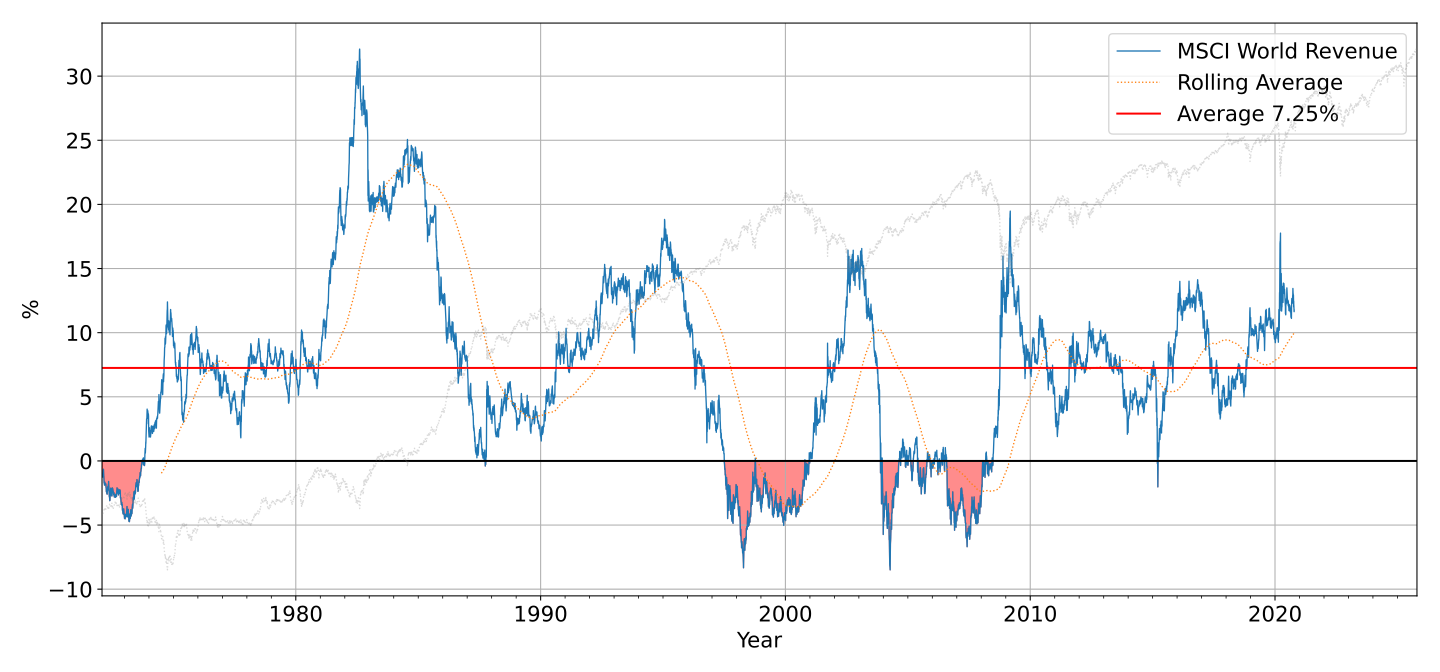
Rolling yearly revenue after 5 years of investing into MSCI World Index
In order to make statements about long-term investments, let’s take a look at the rolling return over 5 years.
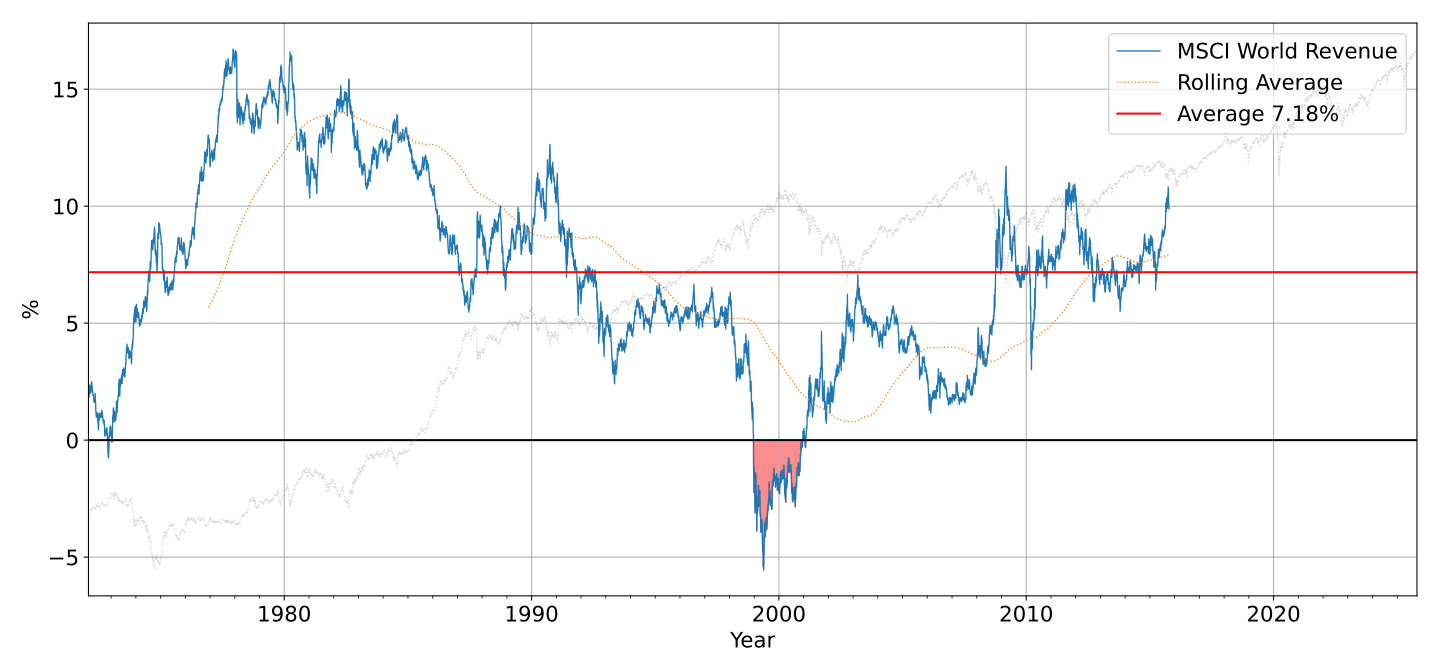
Rolling yearly revenue after 10 years of investing into MSCI World Index
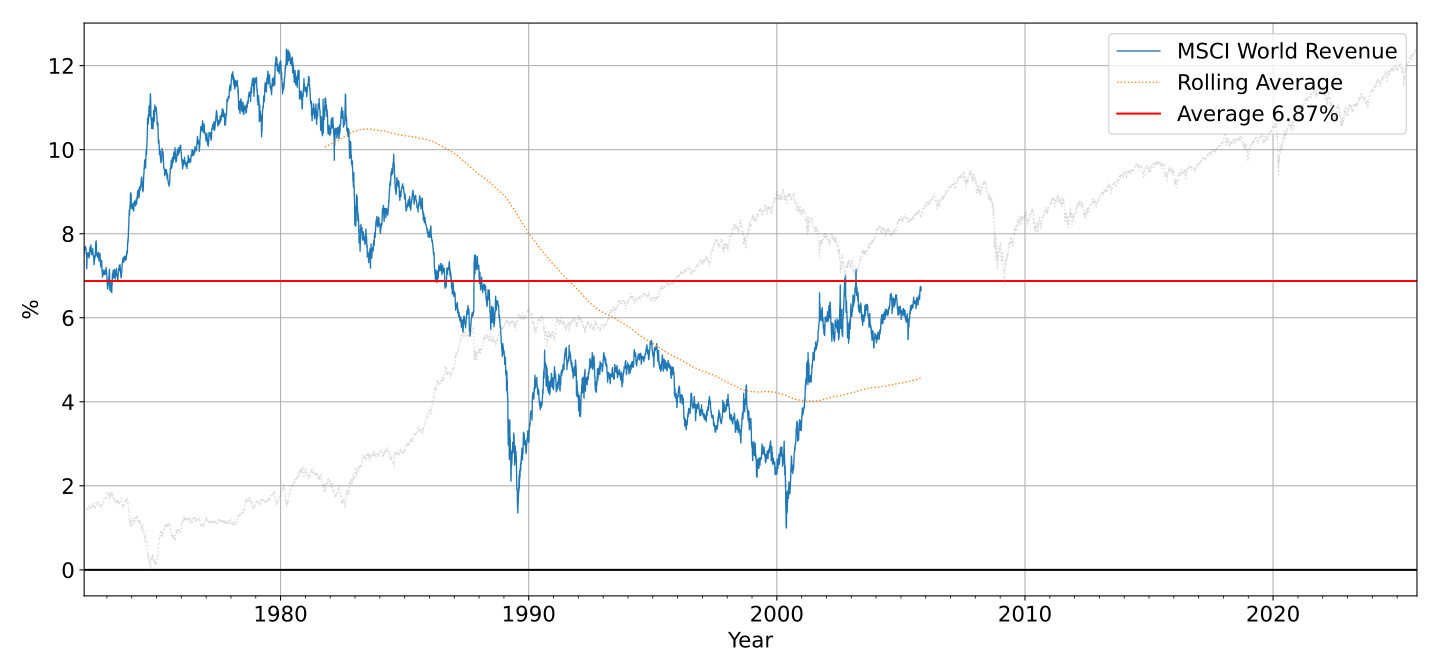
So we will also look at, how your yearly revenue would have been, if you would have invested on any day and hold the asset for 10 years. We see, that there as been only one bad time, to start investing into the MSCI World, which would have been directly before the dotcom bubble bursted. If you did, even after 10 years, you would have not made any profit.
However, all the other times, investing into MSCI World and holding it for 10 years would have brought you yearly renenue of up to 16% p.a. And in average over all time periods you would have get 7% every year.
Rolling yearly revenue after 20 years of investing into MSCI World Index
Let’s have a look, how the situation will change, if you hold the asset for 20 instead of 10 years. We see, that even if you would have invested just before the burst of the dotcom bubble, you would still receive 1% of revenue every year. And in average almost 7% would have paid to your account if you would have invested on any date and hold the asset for 20 years.
Conclusion
So basically, according to the data one can say, that investint into a diversified portfolio will give you a good return of investment while having a moderate risk exposure. It is important, to not get scared, when the market goes down. But instead, keep holding the asset and wait. In the long run, it will be bringing positive revenue.
It also makes sense, to not only focus on the financial markets in the developed world, but also on other markets like the emerging or frontier markets. This especially makes sense, if we consider the research on convergence theories e.g. within the Solow-Swan model, where it is assumed, that emerging economies tend to have a higher growth rate. Therefore it is likely, that this economic growth, measured by the gross domestic product, should be reflected by the financial market in the long run.
⚠️ Caution
This is not an investment advice.
In the end, we have to pour all these findings in to one financial product an start investing. Me personally, I like to recommend and use the Vanguard FTSE All-World ETF, because of their cooperative legal structure and their simple way to cover all aspects mentioned earlier in this post. However, any other product following the same principles will do.