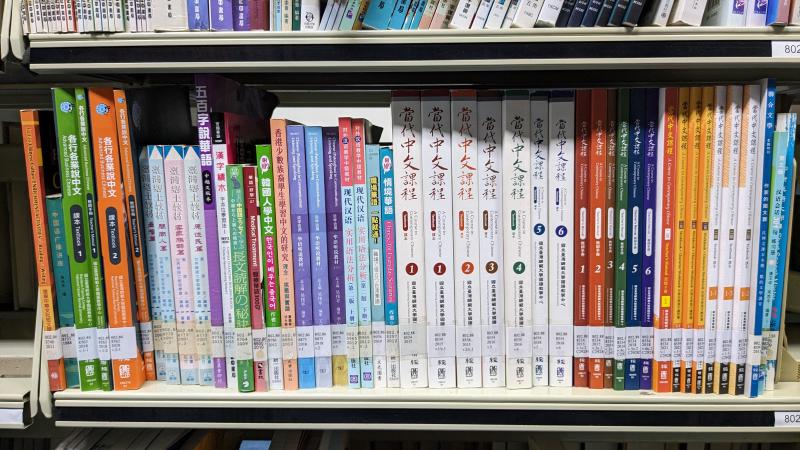
If you are also a kinetic learner, then a textbook may be more suitable for you than podcasts or YouTube videos. There are a few things to consider when choosing a textbook and unfortunately there are all too often tips online about books and learning materials that I wouldn’t recommend. As learning Chinese is a huge time commitment, you should choose a way of learning that is motivating and effective. A bad textbook does not fulfil these criteria.
Basic considerations
1. Simple or traditional characters
The most important question at the very beginning is whether you want to learn the simple or traditional characters, or whether you want to orientate yourself more towards the People’s Republic of China or the Republic of China on Taiwan. Although both speak standard Chinese (Mandarin), there are small differences in the pronunciation of some vocabulary (e.g. 垃圾桶) as well as in the use of vocabulary and, of course, in the use of characters. It also depends on whether you want to obtain a language certificate based on HSK1 or TOCFL2. Different textbooks also prepare you differently for the respective exam.
2. learning objective
Your learning goal is also an important aspect. If you want to prepare for a language certificate, some books are more suitable than books that focus more on conversation or everyday vocabulary. There are also differences in terms of the duration of learning or the level of learning you want to achieve, for which a textbook can accompany you.
3. didactics
There are major differences in the quality and didactics of the textbooks available on the market. Older textbooks still use a rather conservative, sometimes somewhat one-sided teaching methodology. Other textbooks have a complete package with lesson texts for listening comprehension, grammar explanations with suitable exercises, conversation exercises and often also special explanations for a teacher. I recommend these integrated textbooks from my own experience.
Furthermore, the teaching methodology is also very dependent on who it is aimed at. The books presented here are more for adults & students. They are not suitable for school children. However, a study was carried out at the Free University of Berlin in 2021 in which secondary schools offering Chinese courses took part and evaluated German-language teaching material.
4. available language
Most textbooks are only available in the combination Chinese - English. A few textbooks also have corresponding translations in other languages, so that you can learn Chinese directly with your native language. The study linked in the previous point also provides an overview of German-language teaching material for students.
In the following, I would like to present a few very good textbooks, which, with one exception, are only available in English. The books are exclusively integrated textbooks. This means that they not only come with audio files to go with the lesson texts for listening, but also exercises on grammar, writing and speaking.
Simplified characters
New Practical Chinese Reader
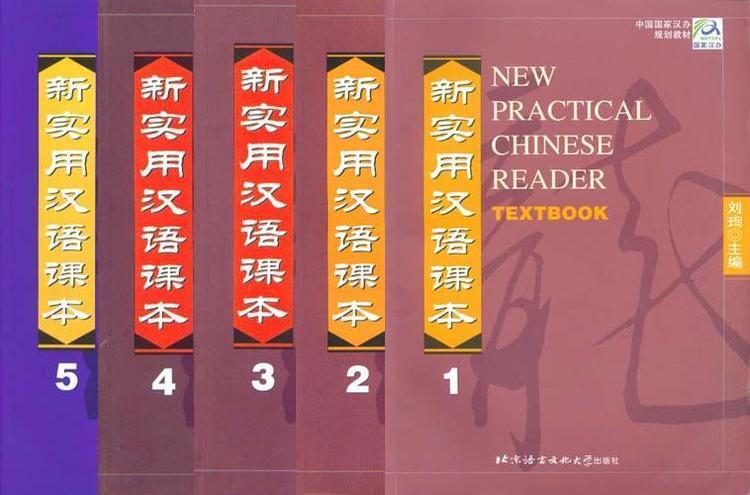
Textbook series: New Practical Chinese Reader
The New Practical Chinese Reader is a standard work of the BLCU and is very widely used. It consists of six different books and almost 70 lessons, each containing lesson texts, grammar introductions and exercises as well as speaking exercises. There is also a workbook with further exercises. A German translation is also available. The book takes you to an advanced language level of HSK 6. However, as the book is somewhat older - the first edition is from 1981 - there is less new vocabulary, e.g. on the subject of cloud technologies.
The book is so widely used that you can also find corresponding PDFs on the relevant file-sharing platforms.
Discover China

Textbook series: Discover China
mydiscoverchina.com
Discover China is a newer textbook from Macmillan Publishing, which is now owned by Springer. In total, the series consists of four books with 48 lessons, which reach a level of HSK 4-5 and also use more modern vocabulary. Here, too, there are two lesson texts for listening and reading in each lesson, plus grammar introductions and exercises as well as a workbook with further exercises. The book is also available in German.
- Audio Files for Text- and Workbook
- Character Writing for TOFU Learn: Buch 1, Buch 2, Buch 3
HSK Standard Course
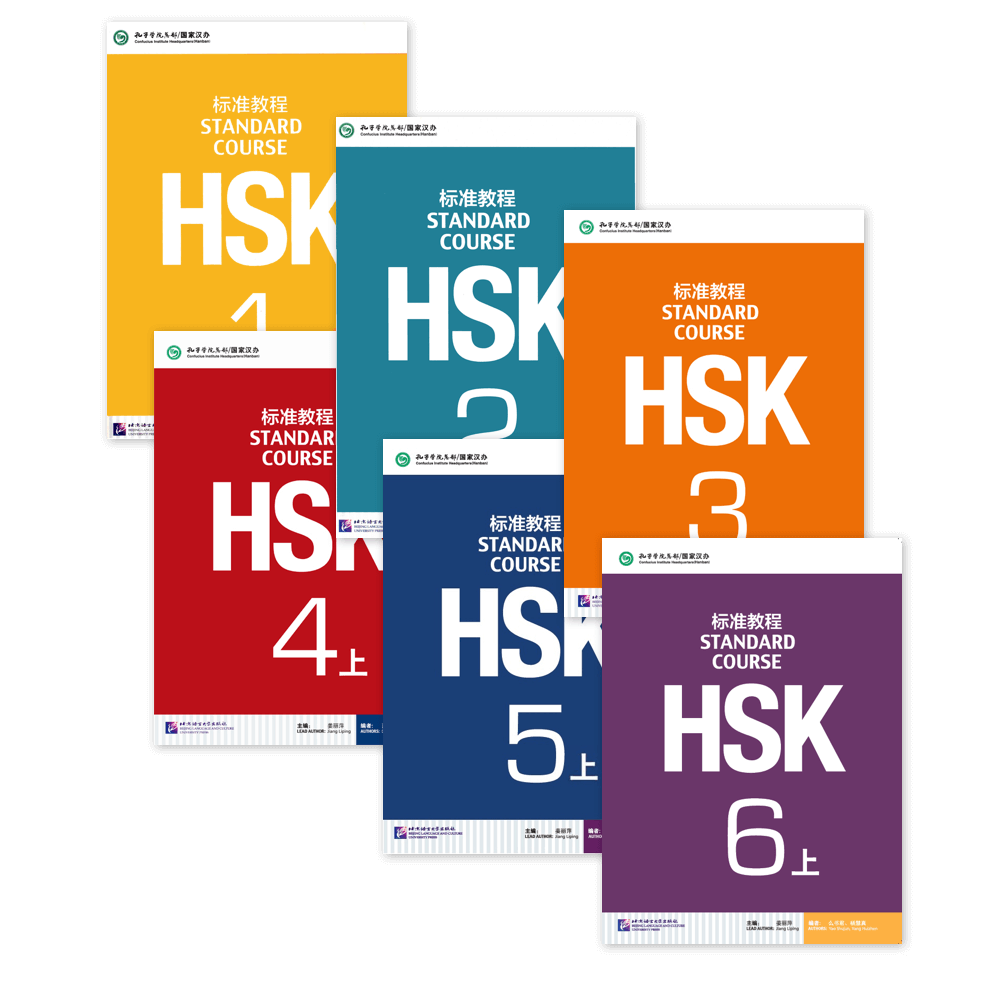
Textbook series: HSK Standard Course
The HSK Standard Course has also been published by the BLCU. As the name of the series suggests, this textbook attempts to prepare directly for the HSK test. There are a total of 9 textbooks in the series, as the books for HSK4-6 are each divided into two books due to the proportionally increasing amount of vocabulary and grammar in the HSK tests.
- Audio files and additional material for the textbook
- Anki Deck Vocabulary (incl. Writing)
- Character Writing for TOFU Learn: HSK1, HSK2, HSK3, HSK4上
Traditional characters
There is also a huge selection of textbooks on traditional characters. I will limit myself here to what I consider to be the three most important ones. All of the following books have a high didactic level and use traditional characters, but also simplified characters for lesson texts. However, they are only available in English. All prepare at least for the TOCFL test up to C1 level and use a . All courses are fully integrated and usually consist of the following:
- the textbook with one lesson text for listening and one for reading, grammar introductions, class exercises, translations into English and basic Chinese
- a workbook with further exercises
- a workbook for writing the new characters (only in the beginner books)
- handouts for the teacher
Further categorised textbooks can be found on the website of the ICLP of the NTU, which maintains a list of textbooks.
👍 Modern Chinese
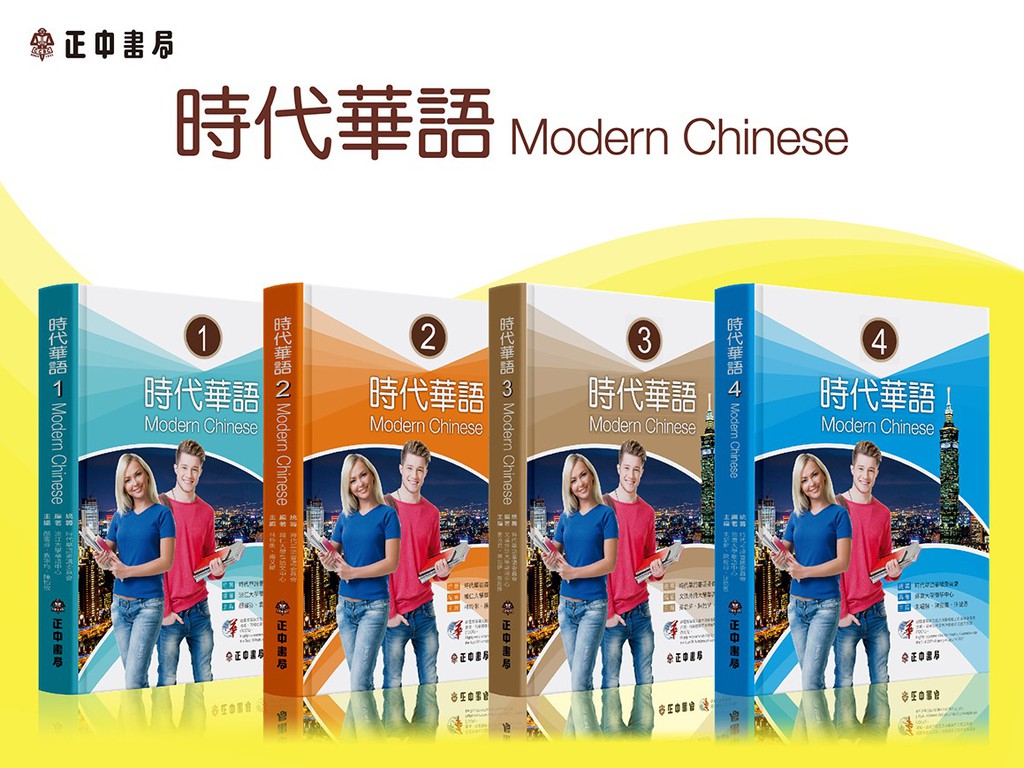
Textbuchserie: Modern Chinese
In my opinion, this is the best book that fulfils the European teaching requirements for language comprehension. It also provides the best preparation for the TOCFL test by focussing on the necessary vocabulary and grammar skills. Four volumes have been published to date, which build up a vocabulary of around 4000 words in a total of 64 lessons. A further 2 volumes with 32 lessons are still to be published, which are intended to prepare for TOCFL C2. So far, this is the only textbook I know of with which such a high language level can be achieved.
- Audio files for text and workbook
- Vocabulary for Pleco
- Anki deck of all vocabulary
- Anki deck of all example sentences
- Character Writing TOFU Learn: Buch 2
A Course in Contemporary Chinese
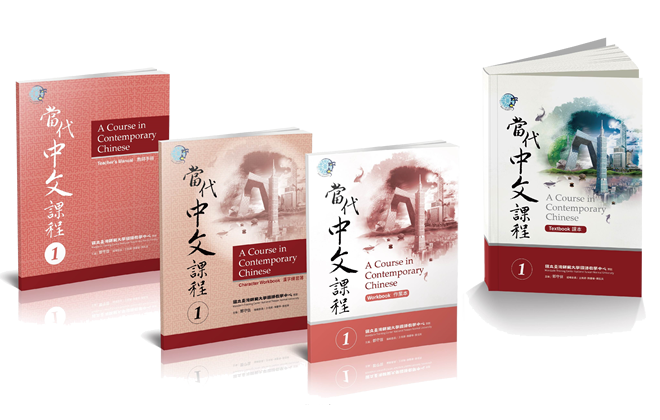
Textbuchserie: A Course in Contemporary Chinese
mtc.edu.tw
The textbook A Course in Contemporary Chinese was published by the MTC of NTNU. It is a very good and structured textbook in 6 volumes with a total of 68 lessons, which builds up a vocabulary of about 5000 words and introduces over 100 grammar patterns. The descriptions are easy to understand and can be used in suitable exercises.
- Audio files for the text and workbook
- Vocabulary for Pleco
- Anki deck of all vocabulary
- Character Writing TOFU Learn: Buch1, Buch 2, Buch 3, Buch 4, [Buch 5], [Buch 6]
In addition to the actual textbook, there are other books from the same publisher that can support learning and round off the learning programme perfectly.
- A to Z Grammar for Chinese Language Learners
- Ultimate Illustrated Grammar Guide
- Ultimate Guide to Chinese Vocabulary & TOCFL to prepare for TOCFL A2, B1, B2
At the end of volume 4, you can also choose to learn more topic-related with the following two series:
Practical Audiovisual Chinese
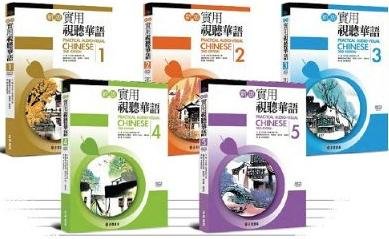
Textbook series: Practical Audiovisual Chinese
Practical Audiovisual Chinese is a somewhat older textbook from Taiwan, also from the MTC of NTNU, which was the standard textbook there for many years. The 5 books, each with 20 lessons, also prepare students for the TOCFL test and build up a vocabulary of around 5000 words. However, as the textbook is somewhat older, newer terms (such as cloud computing) are missing here.
- Audio files for text and workbook (inoffiziell)
- Vocabulary for Pleco
- Anki Deck of all vocabulary
- Character writing for TOFU Learn: Buch 1, Buch 2, Buch 3, Buch 4, Buch 5, [Buch 6]
Summary
Of course there is much, much more. However, I have deliberately limited myself to the books that I have already used myself and that I know are used professionally in language schools in both the People’s Republic of China and Taiwan. In addition, these books can be used without a teacher and are therefore also suitable for self-study. With the textbooks Modern Chinese and A Course in Contemporary Chinese in particular, I am very convinced that the structure of the books makes effective learning possible, as they have been carefully compiled to build on each other. This would also be my recommendation to use one of these two books, even if you want to learn simplified Chinese.